An AI website builder that takes a thought to a finished website
What makes Laarpi different from a typical AI website builder: where it starts, what it asks, how it checks its own work, what it refuses to do, and how to write a prompt that gets a better site.

Ask most AI website builders for a site and you get the same site: a gradient, a centred headline, three cards with icons, a sentence about your workflow. That is not a coincidence. A tool that starts from templates, or from the average of the web, produces the average.
Laarpi takes you from a thought to a finished website, in one place. Its agent, SI, is a coding agent for websites. It asks what would change the result, designs the site from scratch around one idea, writes it as real code, looks at its own screenshots, and revises until the work holds up. Then it ships the site to your domain with sign-in, data and payments on your own accounts.
How Laarpi differs from a typical AI website builder
| A typical AI website builder | Laarpi | |
|---|---|---|
| Starting point | A theme or template, filled with your details | Your idea, and a concept written for it |
| Questions | None, or a fixed form | Up to four, written for your idea, as cards with visual options |
| Design | Layout blocks rearranged | Type, colour, motion and 3D chosen for the concept |
| Output | Pages inside the builder's editor | Real HTML, CSS and JavaScript you can read and edit |
| Quality check | You find the problems | Screenshots, layout checks at six widths, an eight-score art-director review, two or more revision rounds |
| Changes | Regenerate a section | Say what is wrong, or point at it; only that part changes |
| Backend | A separate tool, if any | Your Supabase and Polar, connected |
What happens after you press Start building
- Ask. The agent reads your idea and asks only what would change the site, with palette swatches and font specimens for visual choices. If your message already says enough, it skips this.
- Brief. It writes a plan: the big idea, the story beat by beat, the centrepiece, type, colour, motion and backend. Edit any line before it builds.
- Build. It writes the code live, with open-source assets credited.
- Look. It screenshots the site at desktop and phone sizes, checks layout at six widths, and gets an independent review scored on eight things. It fixes the weakest first.
- Direct and ship. You steer it in plain words or by pointing at the page, then publish.
The full walkthrough is on how it works.
The things it refuses to do
The quickest way to spot a generated site is its defaults. Laarpi runs a lint on every build that treats those defaults as errors, not style choices.
| Area | Flagged |
|---|---|
| Fonts | The most overused families as the main typeface; tired pairings |
| Colour | Default framework purples and indigos, purple-to-blue gradients, gradient-filled headings |
| Copy | Hype words and stock phrases from the banned list |
| Structure | Emoji used as icons, a three-card icon grid as the main feature pattern, a centred hero with two buttons and nothing else, invented testimonials, logo strips of companies that never used you |
| Craft | Missing alt text, skipped heading levels, no focus styles, low contrast, no reduced-motion handling |
A site needs a lint score of 90 or more, zero layout issues and a clean console before it is finished.

What it makes
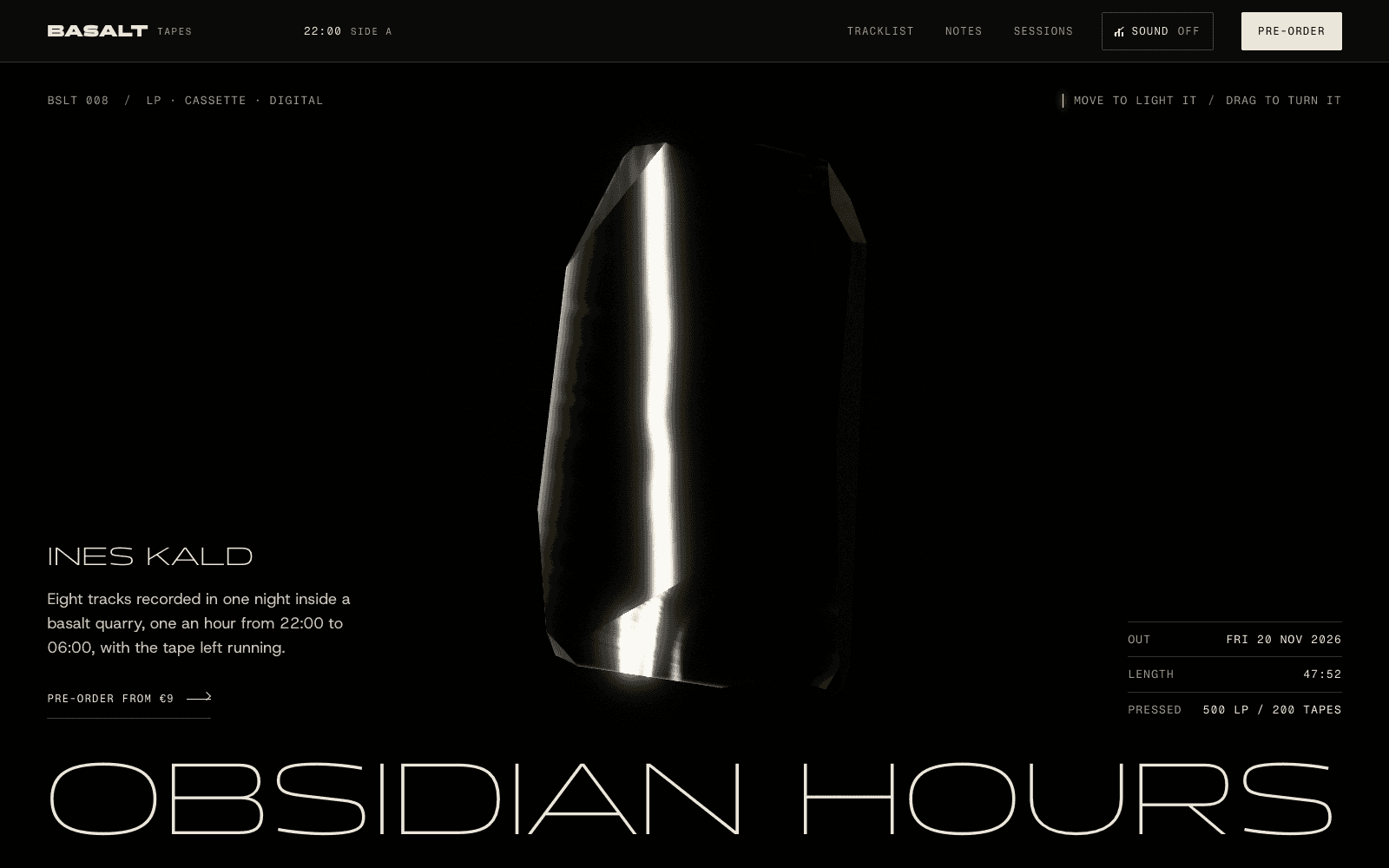
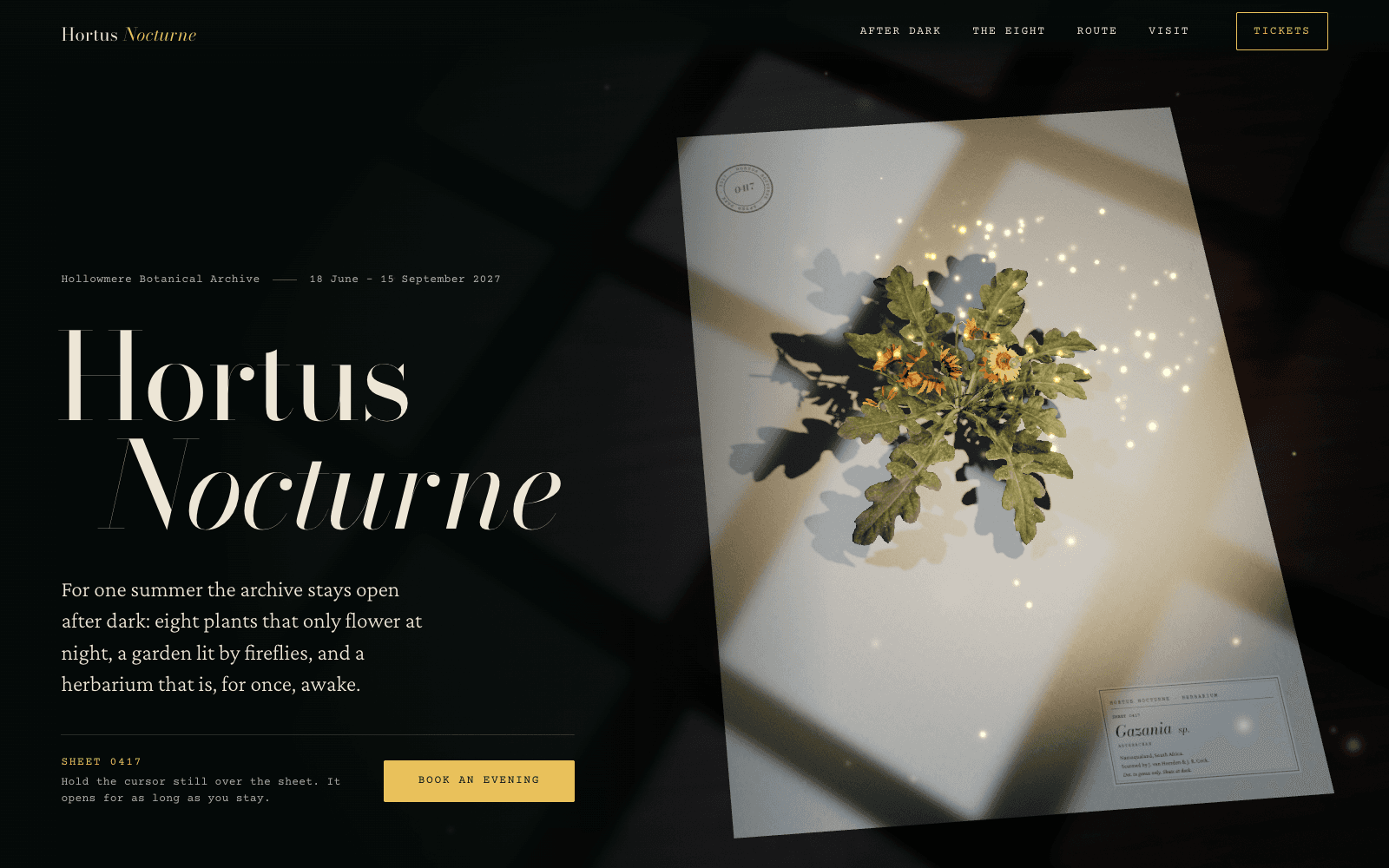
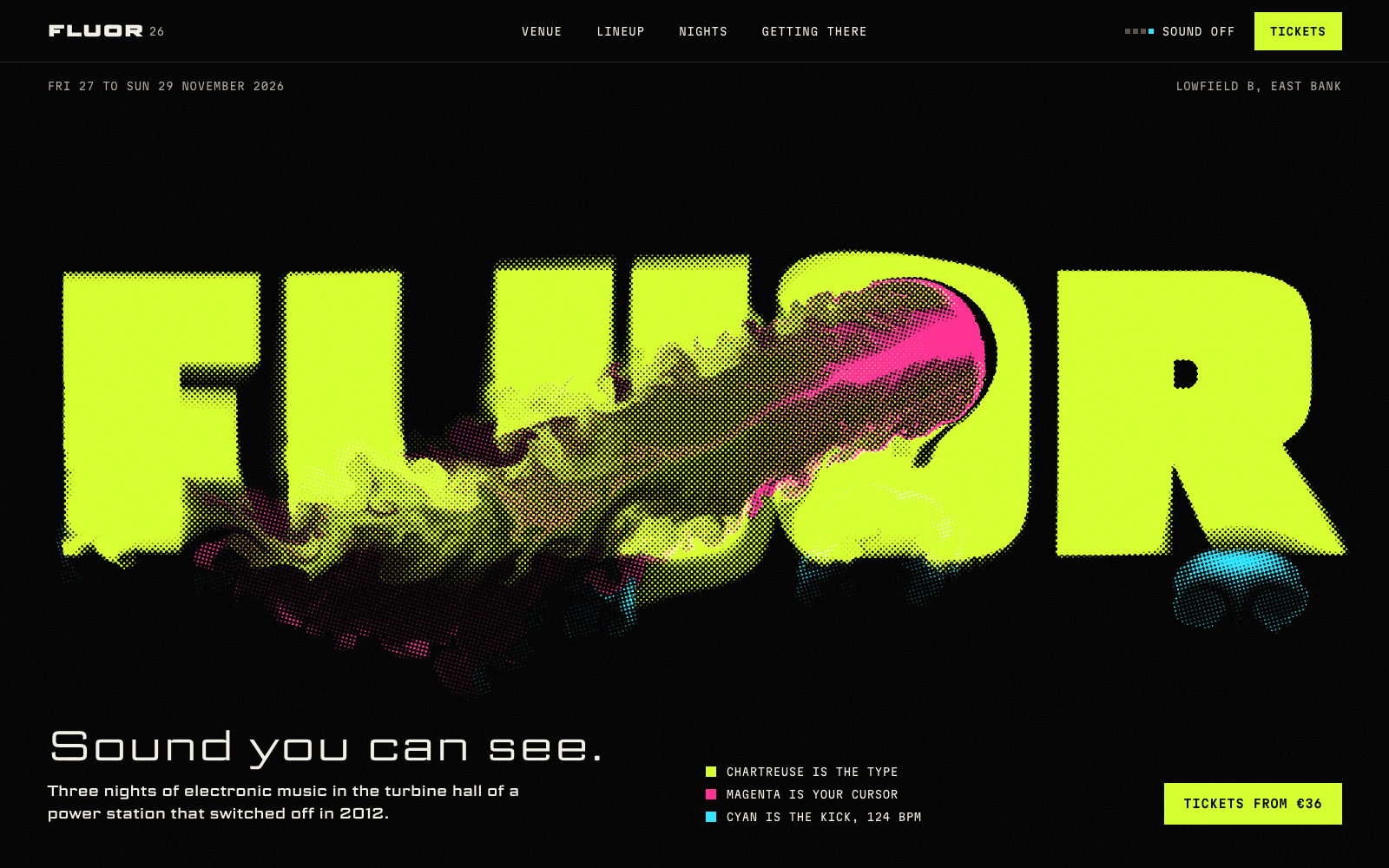
Laarpi is built for sites where looking like everyone else costs you something:
- a portfolio that gets you hired;
- a brand website that shows the craft instead of describing it;
- an event website that sells tickets;
- a product launch page people share and remember;
- a music artist website or a record release;
- an agency website that wins the next client.
The look comes from the idea. To browse starting points, see the styles: Editorial Luxe for fashion, Analog Warmth for places with a story, Swiss Brutal for architects and engineers, and more.
What it does not do
- It is not a one-shot generator. It asks, plans, builds, checks and revises. That takes longer than filling a template, on purpose.
- It is not a drag-and-drop editor. You change the site by conversation, by pointing, or in the code.
- It does not invent your facts. No made-up testimonials, logos, prices or statistics. Your real content makes the site better.
Who it is for
- Designers and creative directors who want a first build with a point of view, then the freedom to direct it line by line or edit the code.
- Founders and makers launching something that deserves better than a theme, with checkout and sign-in on day one.
- Freelancers and small studios who build sites for clients and need range, not one look repeated.
Plans scale from a free tier to heavy daily use; see pricing. If you would rather hand the whole thing over, our team builds with Laarpi through Build with experts.
How to get a better result
The agent can start from a sentence, but a few specifics go a long way.
| A weak prompt | A strong prompt |
|---|---|
| "A website for my bakery" | "A site for a wood-fired bakery above a harbour. The loaves sell out by nine. People should feel the early morning and know when to come." |
| "Portfolio for a designer" | "Portfolio for a type designer. Studios hiring for brand work are the audience. Show three typefaces as things you can type with." |
| "Landing page for my app" | "Launch page for a sleep app for shift workers. Calm, nocturnal, honest. No stock photos of people in bed." |
Say who it is for, what they should feel, the one thing they must do, and what you never want to see. If you already like a site in the community, remix it and change what you need.