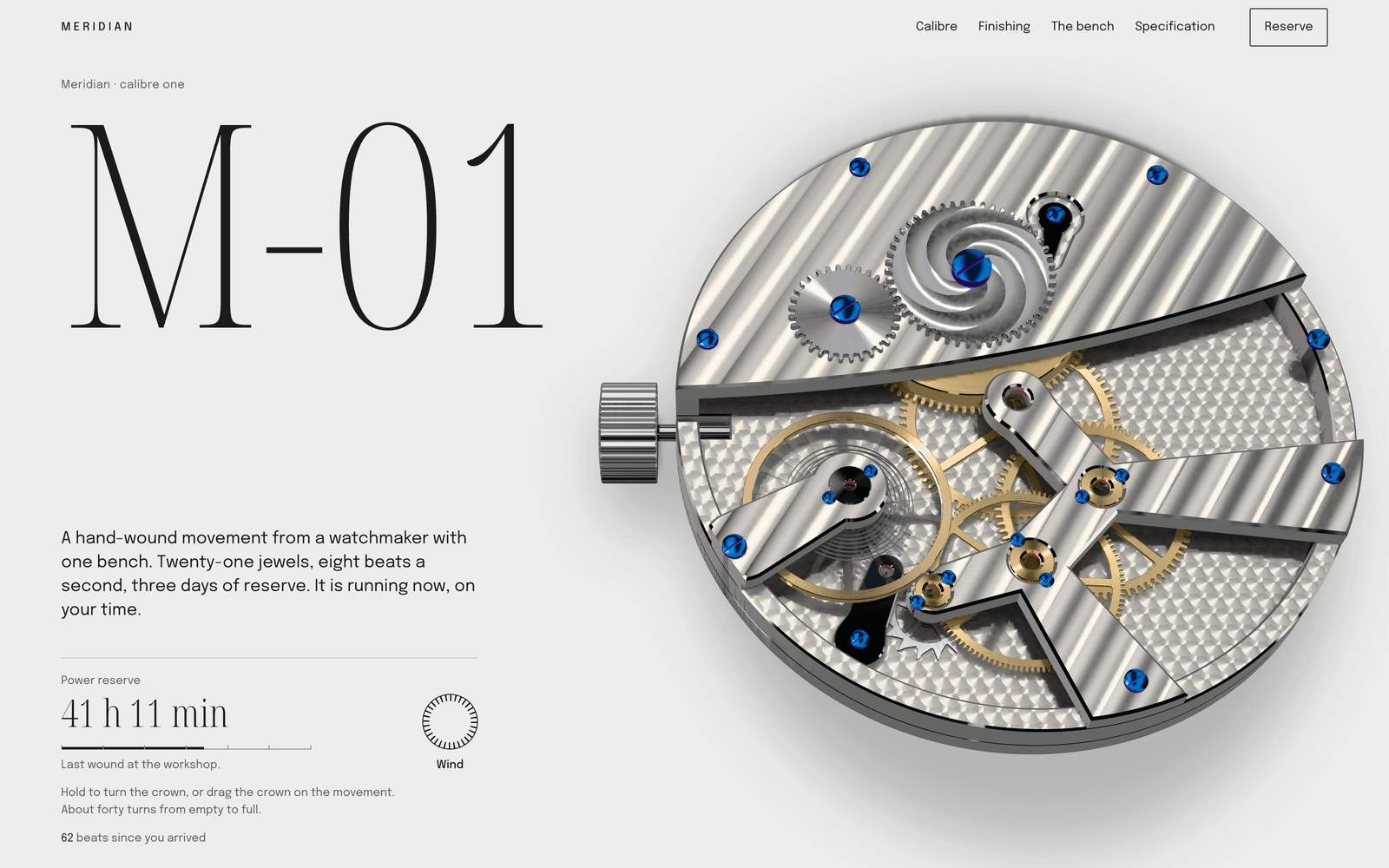
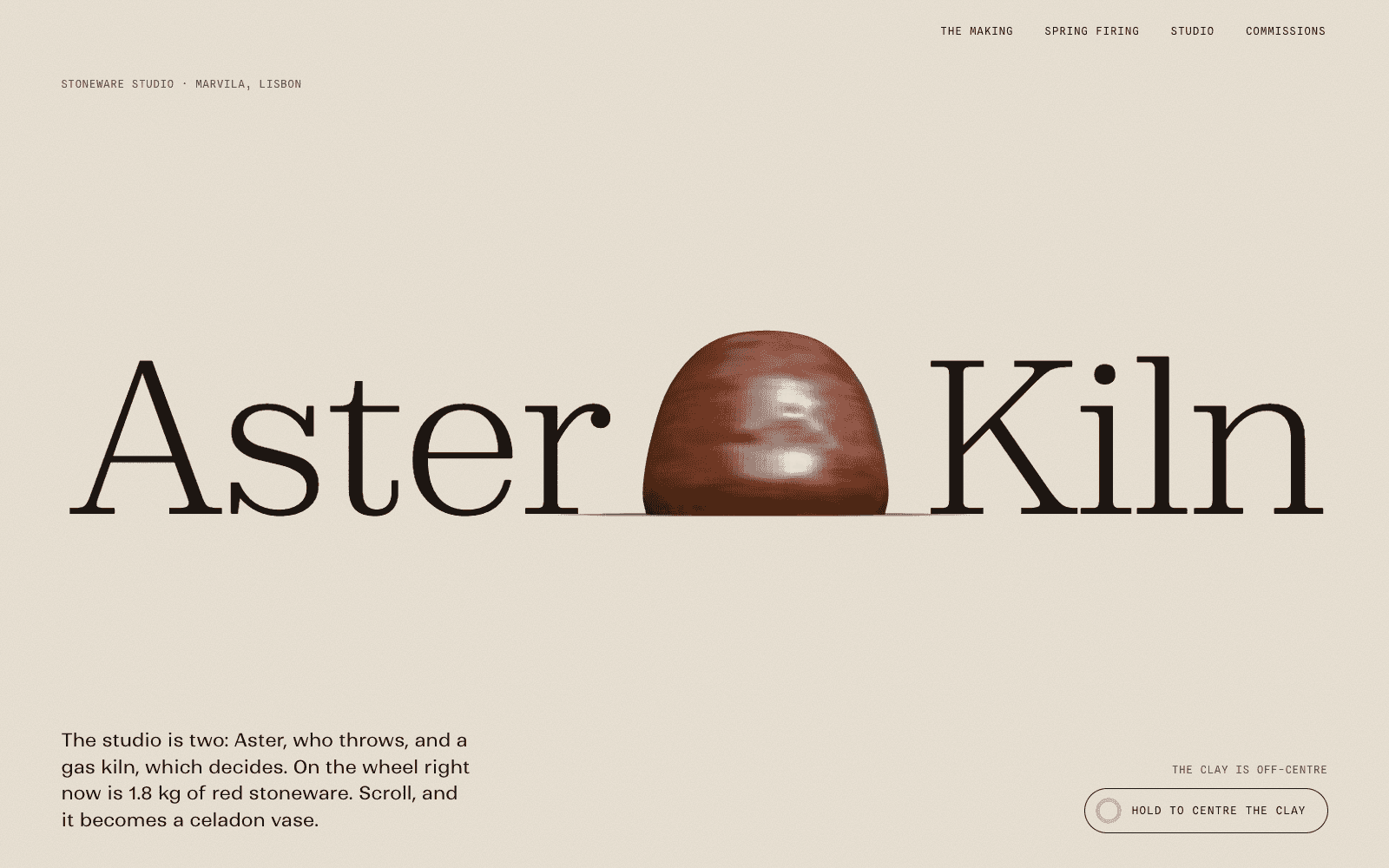
Laarpi vs v0
v0 by Vercel is an AI agent that builds Next.js apps and interfaces and deploys them to Vercel. Laarpi takes a website from a thought to a finished site in one place: designed from scratch, with real-time 3D, on your own Supabase and Polar.
Short answer. Choose v0 if you are a developer or product team building interfaces and full-stack Next.js apps, already on Vercel and GitHub, and you want generated code that drops into your workflow through branches and pull requests. Choose Laarpi if you are making a website that has to be remembered: designed from scratch around your idea, with real-time 3D and motion that carry the story, checked by the agent, and shipped with sign-in, data and payments on your own Supabase and Polar accounts.
v0 is an agent for building software on Vercel's platform. Laarpi is an agent for one thing: websites designed from scratch, from the first thought to the finished site.
| Compared | Laarpi | v0 |
|---|---|---|
| Built for | Websites that have to be remembered: brands, launches, portfolios, events | Apps, interfaces, prototypes and landing pages, for product teams and developers |
| Default stack | Plain HTML, CSS and JavaScript modules; three.js, GSAP and Lenis when the design needs them | Next.js with shadcn/ui and Tailwind CSS |
| Before it builds | Asks the few questions that matter as cards, then writes a plan you can edit | Builds from your prompt, screenshot or Figma file |
| Design process | Concepts, type and palette chosen per idea; checks its own screenshots at six widths and, on a Finish, revises at least twice | Your prompts and design system; Design Mode for visual tweaks |
| Real-time 3D | Built in: three.js scenes written for the story, with a still version for reduced motion | Possible when you ask for it in your prompt |
| The code | Read and edit in the studio; download is planned | Sync to a GitHub repository, with branches and pull requests |
| Backend | Your own Supabase project, connected in clicks | Vercel Marketplace integrations: Supabase, Neon, Upstash, Blob and more |
| Hosting and domains | A laarpi.site address on publish; custom domains from Pro | Deploys to Vercel; vercel.app address or your own domain |
| Paid plans from | $25 a month, or $20 billed yearly | $30 per user a month (Plus), with $30 of included credits |
Facts about v0 come from its pricing page and documentation, checked in October 2026. Both products move quickly, so treat this as a dated snapshot and check the sources on this page.
What v0 is
v0 is Vercel's AI agent for creating real code, full-stack apps and agents from natural language. You describe an idea in your own language, or start from a wireframe, mockup, screenshot or Figma file, and v0 builds it, fixes errors with its own diagnostics, and deploys to Vercel in one click. Teams use it to prototype, build product UI and ship features, publishing directly or through a GitHub pull request.
Its defaults are clear and well suited to product work: new chats start with a Next.js app using shadcn/ui and Tailwind CSS. You can bring your own design system through a custom registry, adjust styles visually in Design Mode, and add databases and other services from the Vercel Marketplace.
What Laarpi is
Laarpi is a coding agent for websites. You describe the site, and before it builds it asks only the questions that change the result, as cards in the chat with concrete options: palette swatches, font specimens, two very different structures. Then it writes the plan, covering the concept, palette, type, sections and motion, which you can edit line by line.
It builds the site as real code, live. Then it looks at its own work: screenshots at desktop and phone sizes, a layout check at six widths for overlaps, overflow and broken headlines, and a separate art-director pass that scores the site on eight things, from concept clarity to reduced motion. On a Finish, it revises at least twice before calling the site done. How it works walks through it.
Defaults decide how a site looks
Every generator has defaults, and defaults shape results more than prompts do.
v0's defaults, Next.js with shadcn/ui and Tailwind, are a sensible foundation for product interfaces: consistent, accessible components that a team can extend. For a brand site, a launch or a portfolio, you will usually want to steer well away from the default look, with your own design system, a Figma file or very specific prompts.
Laarpi's defaults point the other way. There is no component kit to start from. The agent develops more than one concept privately and keeps the strongest, chooses typefaces for the idea and never Inter or Roboto by default, sets a palette for the subject at readable contrast, and composes each viewport around one focal point on a real grid. It avoids the patterns that make generated sites look alike: a purple-to-blue gradient, three feature cards with icons, a centred hero with two buttons and a fake dashboard. If a section could be dropped into another site unchanged, it is redone.
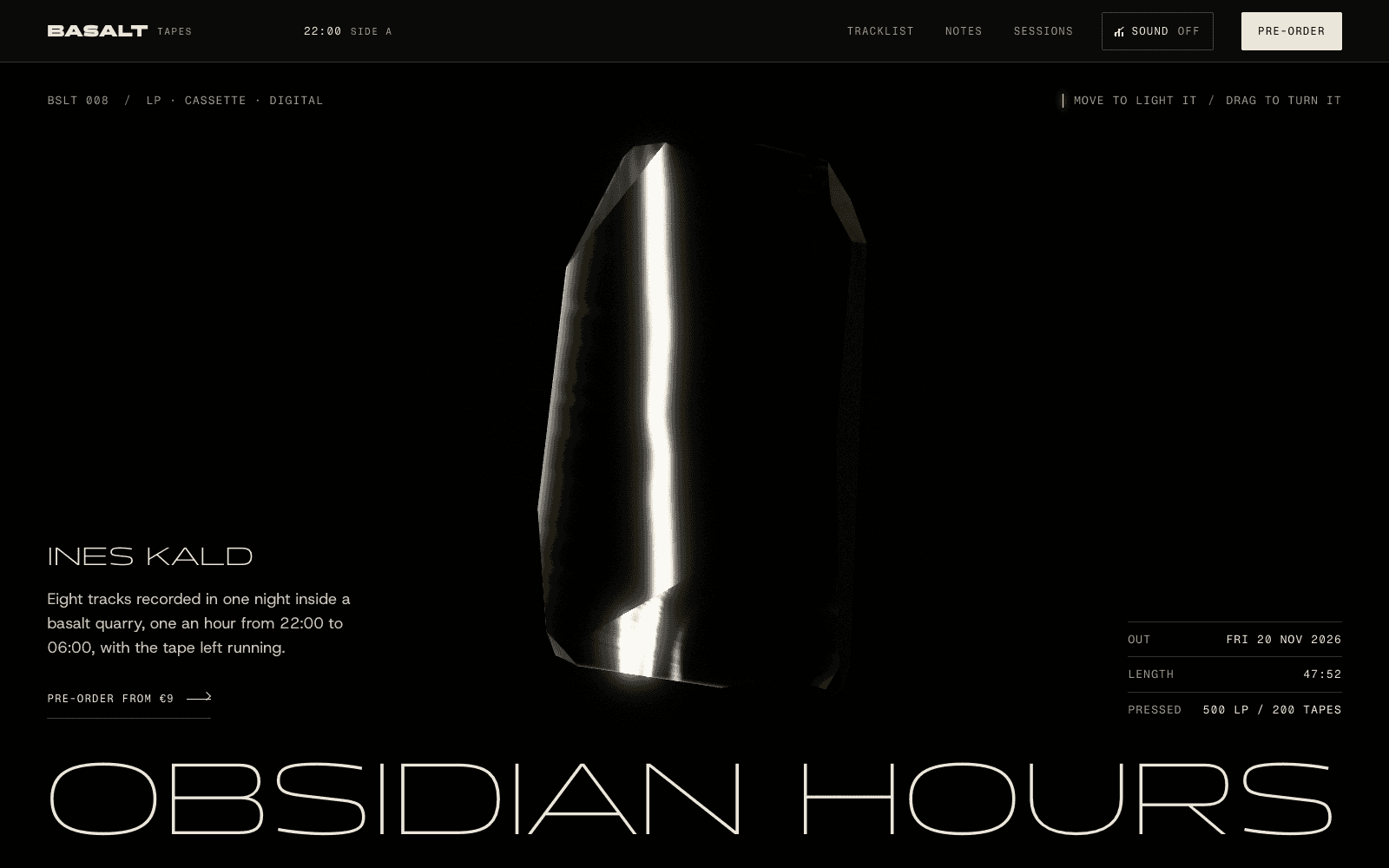
A record label's LP as a slab of obsidian you can light, turn and break into its eight hours.
Real-time 3D and motion
v0 writes whatever your prompts describe, so you can ask it for a three.js scene or an animation library and iterate until it works.
In Laarpi, 3D and motion are designed with the concept. The plan names the centrepiece, how it answers scroll and cursor, and why it belongs in the story. The agent lights scenes with open-source HDR environments, uses real open-source models for real objects and credits them, and abstracts a subject into light, particles, lines or type when no good model exists rather than building a crude stand-in. It caps rendering on phones, pauses it off screen, and ships a composed still version for visitors who turn motion off. Then it screenshots the result and reviews it.
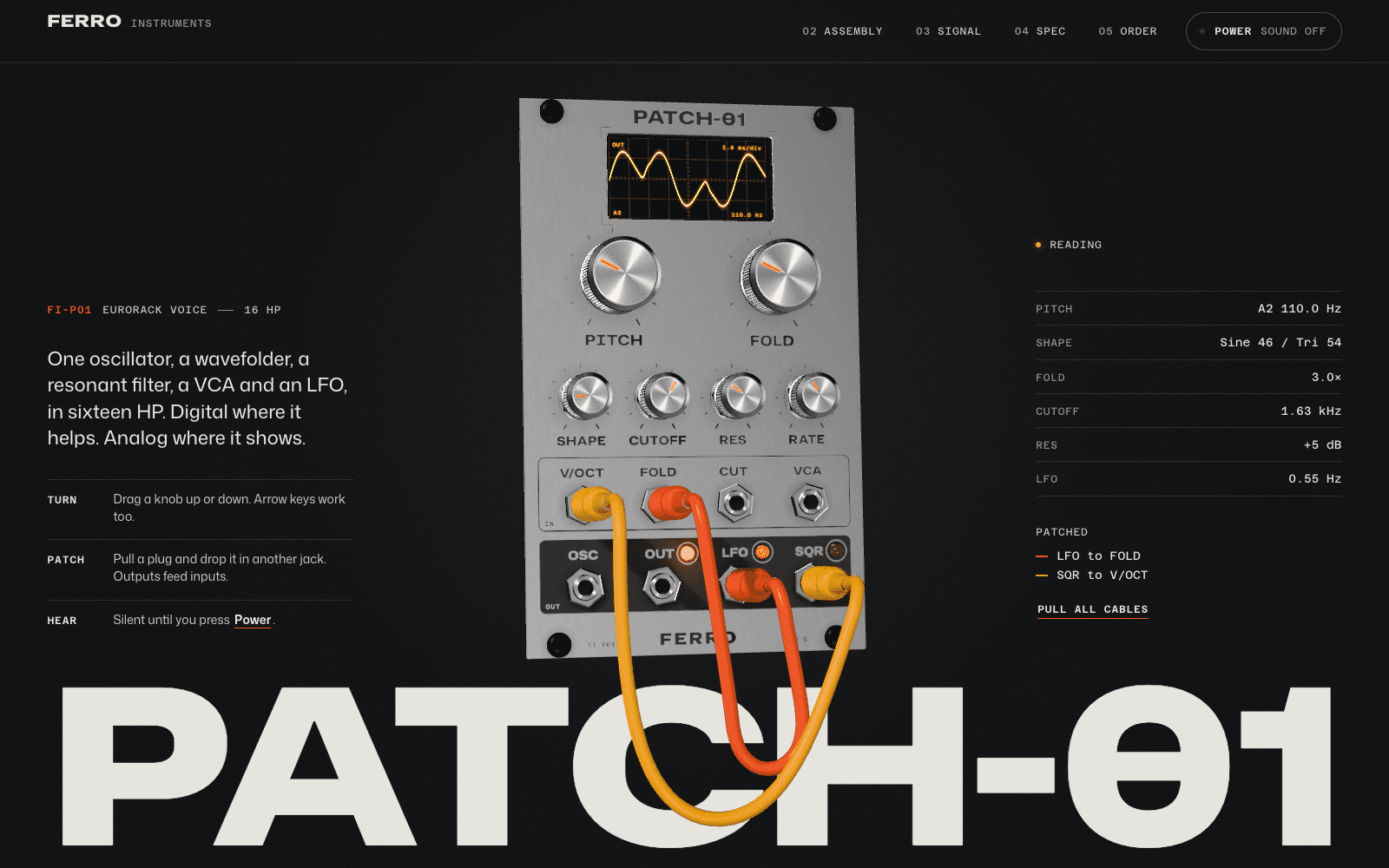
A synthesizer module you can play, patch and take apart. On a launch page, the 3D is the demo. See how Laarpi approaches product launch pages and the 3D website builder.
Code and workflow
v0 is built around a developer workflow. Connect a GitHub repository and the repository becomes the source of truth: v0 works on a branch, opens a pull request, runs your CI and deploys previews on Vercel before anything reaches production. For a team that already ships this way, that integration is v0's biggest strength.
A Laarpi site is plain files: semantic HTML with all the copy in the page, CSS and JavaScript modules, with libraries loaded from a pinned import map. There is no build step and no repository to set up. You can read and edit the code beside the preview on every plan, every edit becomes a version you can restore. Downloading the site is planned and not available yet.
Backend and payments
v0 connects to databases from the Vercel Marketplace, including Supabase, Neon, Upstash and Vercel Blob, and can build backend endpoints with Next.js conventions. Further services come through Marketplace integrations and external APIs.
Laarpi wires the backend a website usually needs, on accounts you own:
- Supabase: connect your account and choose or create a project. Laarpi creates the sign-in settings and the tables your site needs there, with row-level security on.
- Polar: connect your account and Laarpi creates products, checkout links and a customer portal, wired to the buttons on your site. Polar is merchant of record, so it handles sales tax on your sales, and it is built for software and digital goods.
For a launch page, that usually means a waitlist that saves to a table in your own project, sign-in for early access, and a checkout link for a digital product or subscription. The data, customers and revenue sit in your accounts. See the website backend and website payments.
Pricing
| v0 | Laarpi | |
|---|---|---|
| Free | $0: 7 messages a day, deploy to Vercel, Design Mode, GitHub sync | $0: 30 credits a month, up to 3 projects, laarpi.site address with a small “Made with Laarpi” mark |
| Entry paid plan | Plus: $30 per user a month, $30 of included credits per user, plus $2 of free daily credits on login | Pro: $25 a month or $20 billed yearly, 250 credits, 3 custom domains; code download is planned |
| More capacity | Buy additional credits; model choice changes the rate | Max: $100 or $200 a month for 1,200 or 2,800 credits ($80 or $160 billed yearly) |
| Teams | Business: $100 per user a month, with training opt-out by default | Business: $50 a seat a month ($40 billed yearly), 600 pooled credits per seat, 25 domains |
| How usage is measured | Tokens, priced per model, drawn from dollar credits | Each agent turn costs what it really used, rounded up to whole credits |
| Unused allowance | Monthly credits roll over and expire after 65 days | Monthly allowance, no rollover |
v0 deploys to a Vercel project, so Vercel's own plans apply to hosting. Laarpi hosting on laarpi.site and your custom domains doesn't use credits, and Supabase and Polar bill you on your own accounts. Laarpi prices are lower in India and shown automatically on the pricing page. If you would rather hand the site over entirely, Build with experts is our team building it with Laarpi.
Where v0 is the better choice
- You are building product UI or a full-stack app, not a brand site.
- Your team lives in GitHub and Vercel. v0 works through branches, pull requests, CI and preview deployments.
- You have a design system and want generated code that uses it.
- You want model choice and per-token pricing you can tune.
Where Laarpi is the better choice
- The website is the product's first impression, and it must not look like a component kit.
- You want 3D and motion that are planned, checked at every width and accessible, without engineering the prompts.
- You want sign-in, data and payments on your own accounts, with Polar handling sales tax.
- You don't want to set up a repository to get a finished, published site.
See what people have published in the community, and remix any site into your own project.
A quick way to decide
If the next thing you ship is a feature, a dashboard or an app screen, open v0. If it is the page people will see before they ever log in, such as a launch, a brand site, a portfolio or an event, and how it looks and moves is most of the job, open Laarpi. Many teams will use both: the app on v0 and Vercel, the site on Laarpi, joined by one domain.
Also comparing Lovable or Bolt? Read Laarpi vs Lovable and Laarpi vs Bolt.
Sources
Checked October 2026. Plans and features change; the linked pages are the authority.